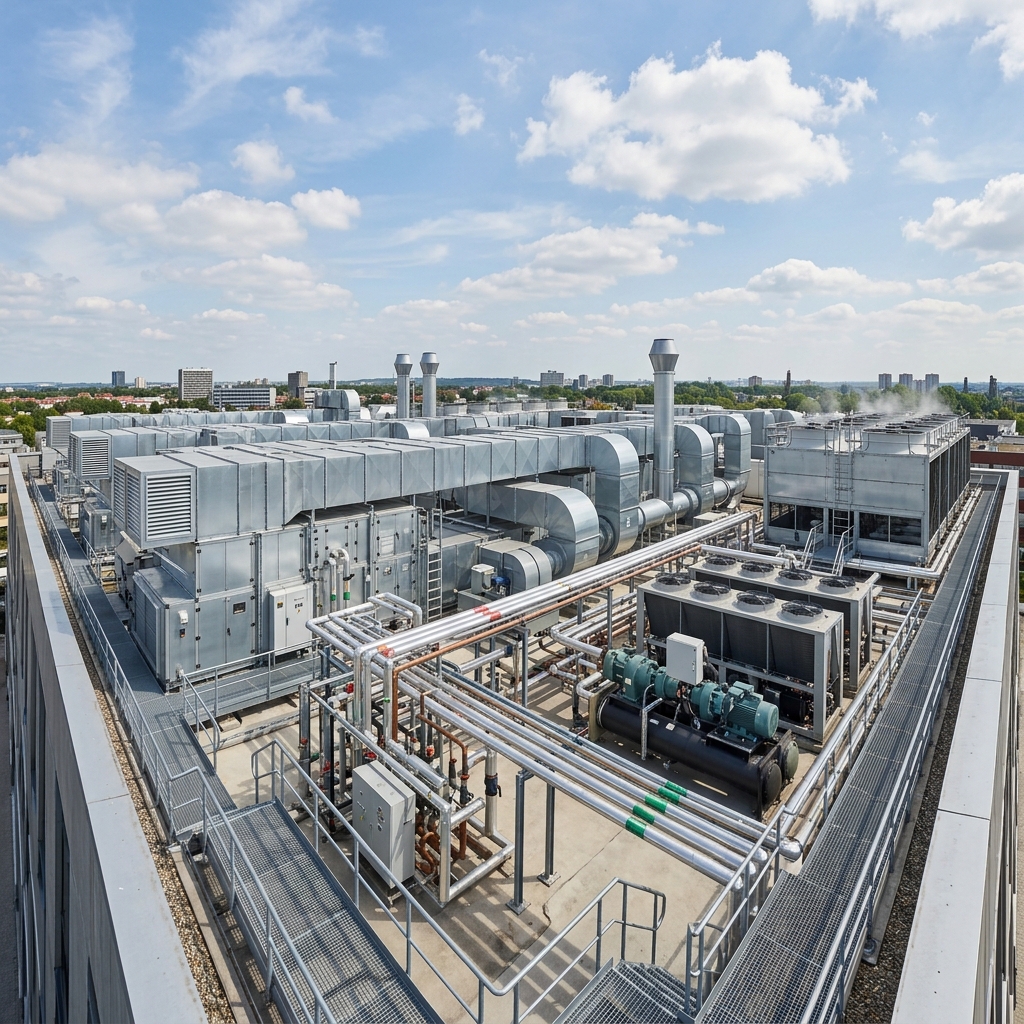
HVAC SYSTEM DESIGN FOR COMMERCIAL BUILDINGS REQUIRES MORE THAN BASIC SIZING
Technical answers for teams evaluating commercial HVAC, system design, and project risk.
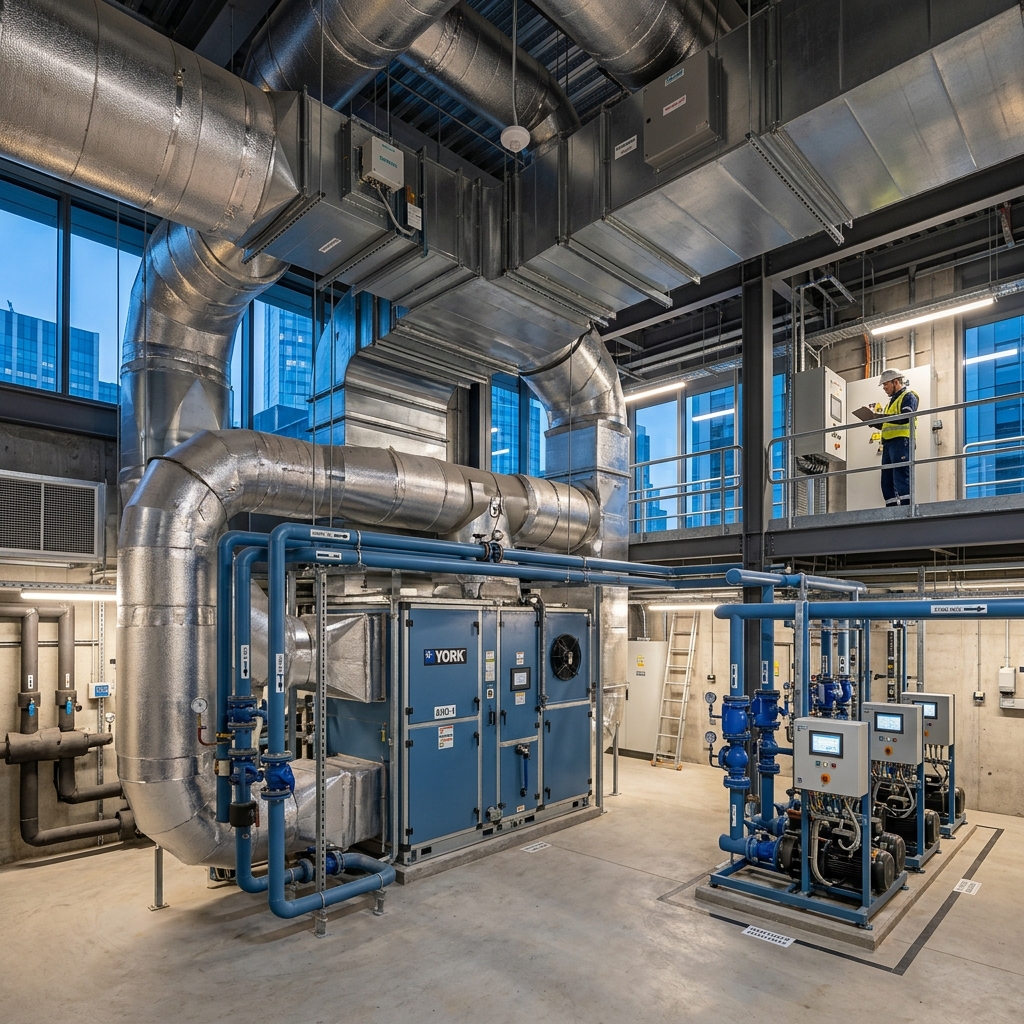
Questions about HVAC system design for technical project teams
Guidance for better planning, not DIY execution.
What should teams know before asking how to design an HVAC system?
Designing an HVAC system requires more than equipment sizing. A professional review should consider building use, HVAC design requirements, airflow, ventilation, loads, controls, and coordination needs.
What defines strong HVAC system design for commercial buildings?
Strong HVAC system design for commercial buildings connects commercial building conditions, commercial HVAC system needs, occupancy, indoor air quality, energy efficiency, and execution-ready documentation.
Why is HVAC load calculation important before equipment decisions?
An HVAC load calculation helps define capacity, airflow, heating and cooling needs, and HVAC equipment selection. Without it, teams risk oversized systems, poor comfort, or higher operating costs.
How do HVAC duct design and HVAC drafting services reduce rework?
HVAC duct design and HVAC drafting services help translate design intent into clearer layouts, coordination drawings, airflow paths, and mechanical design documentation for project teams.
How does MEP coordination affect commercial HVAC project success?
MEP coordination helps align HVAC design, plumbing, electrical, controls, and building systems. This is especially important for industrial HVAC design, larger buildings, and complex facilities.
When should teams consider chilled water systems or hydronic systems for a commercial building?
Chilled water systems and hydronic systems can support larger buildings, but selection depends on loads, controls, space constraints, building codes, and professional engineering review.
How do building automation and management systems affect commercial HVAC performance?
Building automation and management systems help monitor equipment, controls, ventilation, and system efficiency, but they need proper coordination with the overall HVAC system design.
Are VRF systems, DX systems, or packaged HVAC systems right for every project?
No. VRF systems, DX systems, and packaged HVAC systems serve different building types, capacities, and operating needs. Professional review helps define the right HVAC system.
Why does the building envelope matter in HVAC design?
The building envelope affects heat gain, cooling demand, ventilation loads, heating and cooling performance, and equipment sizing. It should be reviewed before final HVAC design decisions.
How do refrigeration systems and air conditioning systems affect industrial and commercial facilities?
Refrigeration systems and air conditioning systems influence temperature control, humidity, equipment performance, and occupant comfort. Complex facilities require professional complex HVAC planning.
Need help reviewing your commercial HVAC requirements?
Talk with a technical specialist.
Move forward with clearer
HVAC design decisions
Share your project requirements and clarify the right technical path.